


Houseplant Has Grown Far Beyond the Dispensary
How Seth Rogen and Evan Goldberg turned a cannabis launch into a high-end lifestyle brand
Houseplant may have started with cannabis flower, but these days the company is just as likely to
sell you a sculptural ashtray, a ceramic planter, a hidden-storage side table or a three-milligram
THC sparkling water.
That is not the usual path for a celebrity cannabis brand.
Most begin with a famous name, a licensing agreement and a jar of flower that looks a lot like
everything else on the dispensary shelf. Houseplant had some of those familiar ingredients at the
beginning, but Seth Rogen, Evan Goldberg and their partners kept building until the company
became something far more interesting.
Today, Houseplant exists somewhere between a cannabis company, a design studio and a home-
entertaining brand. It is also unapologetically high-end. Flower may have opened the door, but
the larger opportunity turned out to be everything surrounding it.
Rogen and Goldberg never had to convince anyone that they actually liked cannabis. The
childhood friends from Vancouver had been writing together since they were teenagers,
eventually creating movies including Superbad and Pineapple Express. Cannabis was already
woven into their work and public identities long before they decided to attach their names to a
product.
They developed Houseplant with entrepreneur Michael Mohr and other partners as Canada
prepared to legalize adult-use cannabis nationwide. The company began working with Canopy
Growth in 2018, and when the partnership was publicly announced the following year, Canopy
provided the licensed production, regulatory infrastructure and distribution network needed to
place Houseplant flower, pre-rolls, softgels and beverages in Canadian stores.
For Houseplant, the relationship offered immediate access to a national market. For Canopy, it
delivered a premium brand backed by two founders whose relationship with cannabis felt
genuine rather than manufactured. That mattered then, and it still does. Cannabis consumers have
always been particularly good at spotting the difference.
Houseplant entered the United States independently in March 2021, launching in California with
flower and a collection of smoking accessories and home goods. The debut generated enough
attention to crash the company’s website, and its initial cannabis inventory reportedly sold out
within 24 hours.
A few months later, Houseplant and Canopy ended their Canadian partnership. Both sides
described the separation as mutual. Canopy was concentrating on brands it controlled outright,
while Houseplant wanted to shape its future around the identity taking form in the United States.
Because Canopy had never been involved in the American operation, the split did not affect
Houseplant’s U.S. business.
Looking back, the breakup feels less like the end of something and more like the moment
Houseplant became its own company.
Houseplant describes its mission simply: making nice things for people who love weed.
That pretty much says it all.
Cannabis consumers have spent generations improvising. A coffee mug becomes an ashtray. A
kitchen drawer becomes a stash box. A chipped dinner plate becomes a rolling tray. Even people
with beautifully designed homes often end up smoking over something that looks like it came
free with a gas-station lighter.
Houseplant saw the problem and decided cannabis consumers deserved better.
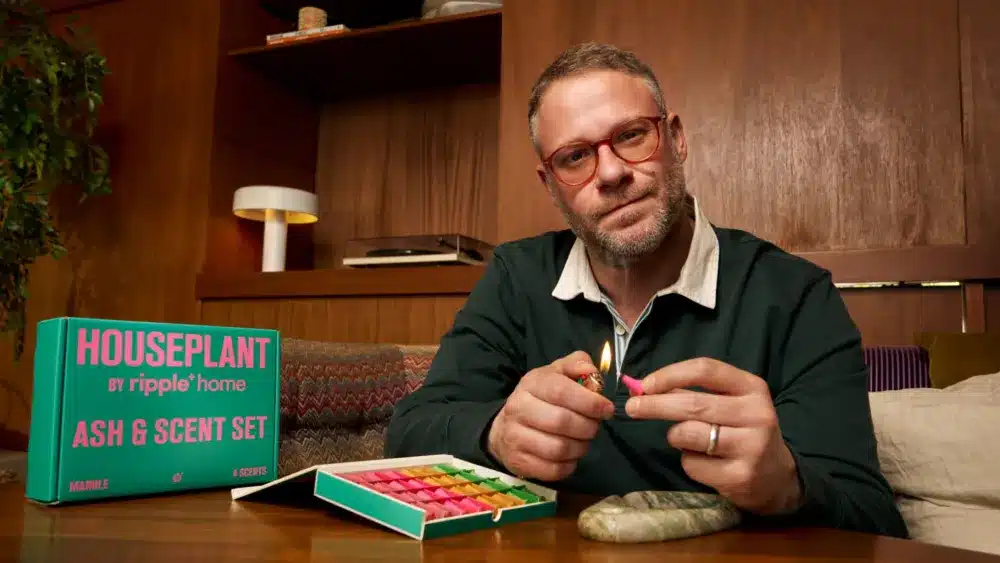
Its collection has included ceramic ashtrays, rolling trays, grinders, stash jars, lighters, planters,
vinyl records, incense and furniture. Some pieces are straightforward and functional. Others are
the kind of objects people ask about the moment they walk into the room.
The brand is also very clear about the customer it is targeting. Houseplant is not aimed at
someone looking for a ten-dollar grinder or a novelty ashtray from the corner smoke shop. A
ceramic ashtray can cost close to $100, a side-table ashtray around $200 and its hidden-storage
Stash Table nearly $500.
Those prices will not appeal to everyone, and that appears to be intentional.
Houseplant is selling to cannabis consumers who already spend money on furniture, art, records,
barware and the other objects they choose to live with. The company is betting that those same
customers will pay more for smoking accessories that look like they belong in the room.
Nobody thinks twice about a whiskey drinker displaying a bar cart, crystal decanters and
expensive bottles. Cannabis accessories, on the other hand, are still commonly shoved into a
drawer before company arrives.
Houseplant treats that as a design failure.
Its answer is simple: make the ashtray nice enough that nobody wants to hide it.
Rogen’s interest in ceramics helped give the company its visual identity. What began as a
personal pottery hobby became closely tied to Houseplant’s product-development process. His
handmade ashtrays and vases began appearing across social media, recognizable by their
rounded forms, heavy glazes and slightly strange, handmade personality.
Houseplant eventually translated that look into commercial products, including ashtrays,
planters, vases, espresso cups and pieces from its colorful Gloopy collection. Many grew from
Rogen’s own designs and ceramic experiments.
His involvement appears to go far beyond posing for a campaign and approving whatever gets
placed in front of him. Houseplant says its team tests products before releasing them, and Rogen
has discussed taking prototypes home and using them for extended periods.
That may sound like a small detail, but anyone who actually smokes understands why it matters.
A beautiful ashtray that cannot comfortably hold a joint, contain ash or survive regular cleaning
is just expensive clutter. At the company’s Los Angeles headquarters, Houseplant also assembled a large collection of
vintage ashtrays. Old Italian, American and midcentury designs became inspiration and research
material.
The collection says a lot about the company’s approach. Houseplant did not invent the decorative
ashtray. Earlier generations already understood how to make smoking accessories feel like part
of a room. Houseplant simply updated the idea for modern cannabis consumers.
Rogen is not presenting himself as a master cultivator or extraction expert. He is designing
around something he knows very well: smoking cannabis and dealing with all the little objects
that come with it. That authenticity may be the company’s biggest advantage.
As Houseplant grew, it gradually moved beyond the smoking session itself. The brand expanded
into products connected to music, coffee, dining and entertaining, while collaborations brought it
into rolling papers, apparel, food, travel and interior design.
A partnership with Carbone Fine Food pushed the idea even further. The collection included
Italian-made serving pieces, glassware, pitchers, leather accessories and a ceramic rolling tray.
On paper, a cannabis company collaborating on dinnerware might sound like a stretch. Inside the
world Houseplant is creating, it makes perfect sense.
Dinner, drinks, records, conversation and cannabis can all be part of the same evening.
Houseplant simply refuses to pretend the last part has to happen secretly in the garage.
That may be the company’s most effective contribution to normalization. Houseplant does not
spend much time lecturing consumers about cannabis acceptance. It makes an ashtray attractive
enough to leave beside the expensive lamp.
Sometimes design makes the argument better than a speech ever could.
Houseplant has also returned to a product category it first explored during its Canadian years. In
late 2024, the company launched hemp-derived THC sparkling waters in the United States. Each
can contains three milligrams of delta-9 THC, with no sugar and no calories. Flavors have
included Pineapple, Citrus, Black Cherry and Blood Orange.
The dose is intentionally modest.
“Not every situation is right for smoking, and not everyone wants to smoke,” Rogen said when
the drinks were introduced.
Three milligrams gives Houseplant a way to reach people who are curious about THC but wary
of strong flower, concentrates or a standard ten-milligram edible. It also fits naturally into a
social setting. A person can open a can, sip it slowly and have a better sense of how much they
are consuming.
That feels more familiar than cutting an edible into pieces or disappearing outside every time
everyone else grabs another drink.
The beverages also introduce Houseplant to people who may never walk into a dispensary. Its
audience is no longer limited to dedicated cannabis consumers. The company is also speaking to
people interested in design, food, music, entertaining and lower-dose alternatives to alcohol.
The drinks and home goods may appear to be completely different businesses, but they fit
together surprisingly well. One makes THC feel more approachable. The other makes cannabis
culture look like it belongs in the room.
Celebrity cannabis companies are nothing new. Most arrive with a burst of publicity, a few
strains and a press release explaining how passionate the celebrity has always been about the
plant. Some are legitimate. Plenty disappear as soon as the first round of attention wears off.
Houseplant has lasted because it developed an identity beyond Rogen and Goldberg’s fame.
The brand has a recognizable look, a sense of humor and products that make sense coming from
the people behind them. Most importantly, it understands that cannabis culture involves far more
than what is inside the jar.
It is the music playing in the room. It is the food on the table. It is the people sitting around long
after dinner. It is the ashtray beside the couch and the drink in someone’s hand.
Houseplant started as a cannabis company, but it has grown into something harder to categorize:
part design studio, part beverage brand and part home-entertaining company.
More than anything, it has become a very stylish, and occasionally very expensive, argument that
cannabis no longer belongs hidden in a drawer.
