
Tag: featured

Houseplant Has Grown Far Beyond the Dispensary

How Seth Rogen and Evan Goldberg turned a cannabis launch into a high-end lifestyle brand

Houseplant may have started with cannabis flower, but these days the company is just as likely to
sell you a sculptural ashtray, a ceramic planter, a hidden-storage side table or a three-milligram
THC sparkling water.


That is not the usual path for a celebrity cannabis brand.
Most begin with a famous name, a licensing agreement and a jar of flower that looks a lot like
everything else on the dispensary shelf. Houseplant had some of those familiar ingredients at the
beginning, but Seth Rogen, Evan Goldberg and their partners kept building until the company
became something far more interesting.

Today, Houseplant exists somewhere between a cannabis company, a design studio and a home-
entertaining brand. It is also unapologetically high-end. Flower may have opened the door, but

the larger opportunity turned out to be everything surrounding it.
Rogen and Goldberg never had to convince anyone that they actually liked cannabis. The
childhood friends from Vancouver had been writing together since they were teenagers,
eventually creating movies including Superbad and Pineapple Express. Cannabis was already
woven into their work and public identities long before they decided to attach their names to a
product.

They developed Houseplant with entrepreneur Michael Mohr and other partners as Canada
prepared to legalize adult-use cannabis nationwide. The company began working with Canopy
Growth in 2018, and when the partnership was publicly announced the following year, Canopy
provided the licensed production, regulatory infrastructure and distribution network needed to
place Houseplant flower, pre-rolls, softgels and beverages in Canadian stores.
For Houseplant, the relationship offered immediate access to a national market. For Canopy, it
delivered a premium brand backed by two founders whose relationship with cannabis felt
genuine rather than manufactured. That mattered then, and it still does. Cannabis consumers have
always been particularly good at spotting the difference.


Houseplant entered the United States independently in March 2021, launching in California with
flower and a collection of smoking accessories and home goods. The debut generated enough
attention to crash the company’s website, and its initial cannabis inventory reportedly sold out
within 24 hours.


A few months later, Houseplant and Canopy ended their Canadian partnership. Both sides
described the separation as mutual. Canopy was concentrating on brands it controlled outright,
while Houseplant wanted to shape its future around the identity taking form in the United States.
Because Canopy had never been involved in the American operation, the split did not affect
Houseplant’s U.S. business.

Looking back, the breakup feels less like the end of something and more like the moment
Houseplant became its own company.


Houseplant describes its mission simply: making nice things for people who love weed.
That pretty much says it all.
Cannabis consumers have spent generations improvising. A coffee mug becomes an ashtray. A
kitchen drawer becomes a stash box. A chipped dinner plate becomes a rolling tray. Even people
with beautifully designed homes often end up smoking over something that looks like it came
free with a gas-station lighter.


Houseplant saw the problem and decided cannabis consumers deserved better.
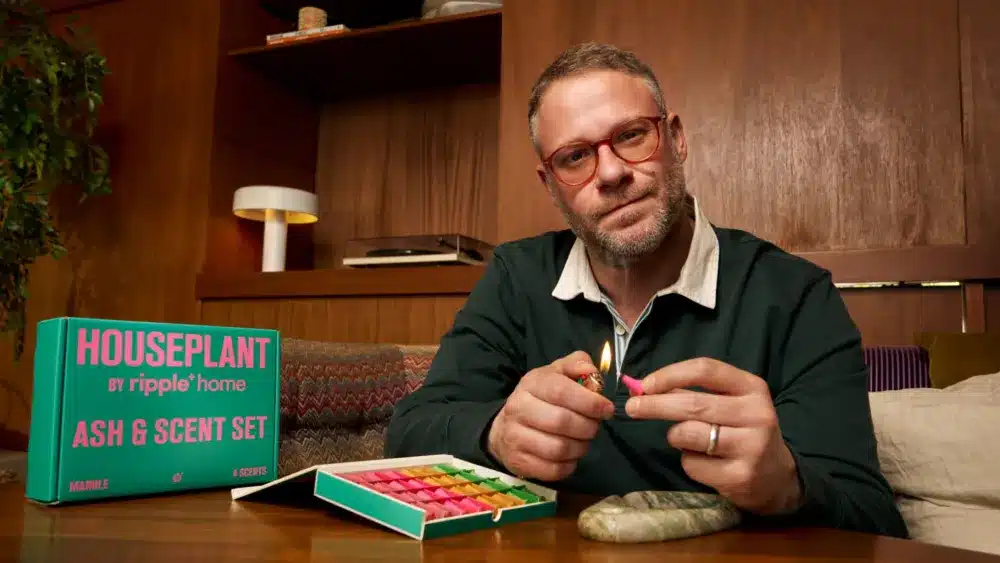
Its collection has included ceramic ashtrays, rolling trays, grinders, stash jars, lighters, planters,
vinyl records, incense and furniture. Some pieces are straightforward and functional. Others are
the kind of objects people ask about the moment they walk into the room.
The brand is also very clear about the customer it is targeting. Houseplant is not aimed at
someone looking for a ten-dollar grinder or a novelty ashtray from the corner smoke shop. A
ceramic ashtray can cost close to $100, a side-table ashtray around $200 and its hidden-storage
Stash Table nearly $500.


Those prices will not appeal to everyone, and that appears to be intentional.
Houseplant is selling to cannabis consumers who already spend money on furniture, art, records,
barware and the other objects they choose to live with. The company is betting that those same
customers will pay more for smoking accessories that look like they belong in the room.
Nobody thinks twice about a whiskey drinker displaying a bar cart, crystal decanters and
expensive bottles. Cannabis accessories, on the other hand, are still commonly shoved into a
drawer before company arrives.
Houseplant treats that as a design failure.


Its answer is simple: make the ashtray nice enough that nobody wants to hide it.
Rogen’s interest in ceramics helped give the company its visual identity. What began as a
personal pottery hobby became closely tied to Houseplant’s product-development process. His
handmade ashtrays and vases began appearing across social media, recognizable by their
rounded forms, heavy glazes and slightly strange, handmade personality.


Houseplant eventually translated that look into commercial products, including ashtrays,
planters, vases, espresso cups and pieces from its colorful Gloopy collection. Many grew from
Rogen’s own designs and ceramic experiments.
His involvement appears to go far beyond posing for a campaign and approving whatever gets
placed in front of him. Houseplant says its team tests products before releasing them, and Rogen
has discussed taking prototypes home and using them for extended periods.


That may sound like a small detail, but anyone who actually smokes understands why it matters.
A beautiful ashtray that cannot comfortably hold a joint, contain ash or survive regular cleaning
is just expensive clutter. At the company’s Los Angeles headquarters, Houseplant also assembled a large collection of
vintage ashtrays. Old Italian, American and midcentury designs became inspiration and research
material.

The collection says a lot about the company’s approach. Houseplant did not invent the decorative
ashtray. Earlier generations already understood how to make smoking accessories feel like part
of a room. Houseplant simply updated the idea for modern cannabis consumers.
Rogen is not presenting himself as a master cultivator or extraction expert. He is designing
around something he knows very well: smoking cannabis and dealing with all the little objects
that come with it. That authenticity may be the company’s biggest advantage.
As Houseplant grew, it gradually moved beyond the smoking session itself. The brand expanded
into products connected to music, coffee, dining and entertaining, while collaborations brought it
into rolling papers, apparel, food, travel and interior design.

A partnership with Carbone Fine Food pushed the idea even further. The collection included
Italian-made serving pieces, glassware, pitchers, leather accessories and a ceramic rolling tray.
On paper, a cannabis company collaborating on dinnerware might sound like a stretch. Inside the
world Houseplant is creating, it makes perfect sense.

Dinner, drinks, records, conversation and cannabis can all be part of the same evening.
Houseplant simply refuses to pretend the last part has to happen secretly in the garage.
That may be the company’s most effective contribution to normalization. Houseplant does not
spend much time lecturing consumers about cannabis acceptance. It makes an ashtray attractive
enough to leave beside the expensive lamp.

Sometimes design makes the argument better than a speech ever could.
Houseplant has also returned to a product category it first explored during its Canadian years. In
late 2024, the company launched hemp-derived THC sparkling waters in the United States. Each
can contains three milligrams of delta-9 THC, with no sugar and no calories. Flavors have
included Pineapple, Citrus, Black Cherry and Blood Orange.

The dose is intentionally modest.
“Not every situation is right for smoking, and not everyone wants to smoke,” Rogen said when
the drinks were introduced.

Three milligrams gives Houseplant a way to reach people who are curious about THC but wary
of strong flower, concentrates or a standard ten-milligram edible. It also fits naturally into a
social setting. A person can open a can, sip it slowly and have a better sense of how much they
are consuming.

That feels more familiar than cutting an edible into pieces or disappearing outside every time
everyone else grabs another drink.

The beverages also introduce Houseplant to people who may never walk into a dispensary. Its
audience is no longer limited to dedicated cannabis consumers. The company is also speaking to
people interested in design, food, music, entertaining and lower-dose alternatives to alcohol.
The drinks and home goods may appear to be completely different businesses, but they fit
together surprisingly well. One makes THC feel more approachable. The other makes cannabis
culture look like it belongs in the room.

Celebrity cannabis companies are nothing new. Most arrive with a burst of publicity, a few
strains and a press release explaining how passionate the celebrity has always been about the
plant. Some are legitimate. Plenty disappear as soon as the first round of attention wears off.
Houseplant has lasted because it developed an identity beyond Rogen and Goldberg’s fame.
The brand has a recognizable look, a sense of humor and products that make sense coming from
the people behind them. Most importantly, it understands that cannabis culture involves far more
than what is inside the jar.

It is the music playing in the room. It is the food on the table. It is the people sitting around long
after dinner. It is the ashtray beside the couch and the drink in someone’s hand.
Houseplant started as a cannabis company, but it has grown into something harder to categorize:
part design studio, part beverage brand and part home-entertaining company.
More than anything, it has become a very stylish, and occasionally very expensive, argument that
cannabis no longer belongs hidden in a drawer.

Raiders of the Texas Hemp

Shift inventory toward compliant CBD products.
Focus on hemp-derived Delta-9 products believed to remain lawful.

Others continue to challenge the state’s actions in court, arguing regulators exceeded the authority granted by the Legislature and that additional legal challenges remain possible.

What Comes Next?

The hemp industry’s fight is far from over.

Attention is now turning toward Washington, where additional federal hemp reforms are expected to take effect later this year. Those changes would move federal hemp regulation toward a “total THC” standard rather than measuring only Delta-9 THC—a change that could further reshape the industry nationwide if implemented.

At the same time, Texas lawmakers and industry groups continue debating whether the state should regulate intoxicating hemp products rather than prohibit large portions of the market.
For now, however, the message from law enforcement is clear:

Products that were commonly sold in Texas just days ago may now expose consumers and retailers to serious criminal penalties.

The Blazed Take

The Texas hemp industry built thousands of businesses including ours; and supported tens of thousands of jobs under rules established after the 2018 Farm Bill and Texas House Bill 1325. This sudden shift in enforcement has created uncertainty for retailers, absolute confusion for consumers!

Whether future court challenges, legislative action or federal reform change the landscape again remains to be seen. Until then, Texans should will be forced to the black market for THC, including online sales from out of state!

Unfortunately the legal environment surrounding hemp-derived THC products has so changed dramatically—and and with such dramatic effects that sadly products that once sat openly on store shelves may now carry significant harsh legal risk.

Will Congress Save the Hemp Industry Before November 12?

The trapdoor has already opened.
For much of the hemp industry, Texas became the first chamber inside the Temple of Doom as new restrictions on hemp-derived THC products took effect. Retailers pulled products from their shelves, manufacturers halted production, and thousands of businesses found themselves navigating one of the most uncertain moments since the passage of the 2018 Farm Bill.

>

But the adventure isn’t over.

Beyond the first chamber lies an even greater challenge: Washington, D.C.
As Congress approaches the November 12 deadline, lawmakers face a decision that could reshape the future of hemp across the United States. At the center of the debate is proposed federal language that critics say could dramatically narrow the legal hemp marketplace by changing how compliance is measured.

To many in the industry, the countdown has begun.

Farmers, processors, distributors, smoke shops, wellness retailers, and manufacturers are watching Capitol Hill with growing concern. Millions of dollars in investment—and thousands of American jobs—could be affected depending on how Congress chooses to proceed.
Supporters of tighter federal rules argue stronger oversight is needed to close loopholes involving intoxicating hemp products and to create clearer standards for regulators and consumers. Industry advocates counter that broad restrictions could unintentionally damage legitimate businesses that have operated legally under existing federal law for years.

Several members of Congress, including Senator Rand Paul, have voiced support for protecting legal hemp and preserving the intent of the 2018 Farm Bill. Industry organizations continue urging lawmakers to pursue reforms that target bad actors without dismantling an industry that has become an important part of American agriculture and small business.

For hemp businesses, November 12 represents more than another legislative deadline.

It is the moment when Congress must decide whether to reinforce the foundation of the legal hemp industry—or allow new restrictions to redefine it.

Like every great adventure, the ending has not yet been written.
The torch is still lit. The clock is still ticking. And somewhere beyond the final chamber of the Temple of Doom, the future of America’s hemp industry awaits.

Healthcare Professionals Overwhelmingly Agree Cannabis “Legitimate Therapeutic Use”


Over eight in ten US healthcare professionals acknowledge cannabis’ therapeutic efficacy and an even greater percentage say that it should be legal for medical purposes, according to survey data published in the Journal of Cannabis Research.

Eight hundred and seventy-nine healthcare professionals – including mental health professionals, registered nurses, and physicians – participated in the survey.

Consistent with prior surveys, “most respondents (>85 percent), regardless of their role in healthcare, believed cannabis to have legitimate therapeutic uses and had patients who used cannabis. Furthermore, most participants were supportive of legal access to medical cannabis, open to using it in their own practice, and interested in receiving further training to do so.”


Overall, 95 percent of respondents expressed support for the legal medical use of cannabis and 74 percent said that they personally would recommend cannabis therapy to their patients. Eighty-nine percent of respondents acknowledging having patients who are current cannabis consumers.


Despite cannabis’ growing favorability among healthcare professionals, less than one-third of participants acknowledged having received “formal clinical training” regarding how to “integrate medical cannabis into their practice” – a finding that is also consistent with other surveys of healthcare providers.


Commenting on the survey data, NORML’s Deputy Director Paul Armentano said: “The use and efficacy of medical cannabis is now widely accepted among healthcare professionals. As more physicians, nurses, and others integrate medical cannabis into their clinical practices, it is vital that medical associations, institutions, and educational curricula similarly incorporate and embrace cannabis as a mainstream and established therapeutic option for patients.”


The full text of the study, “Knowledge, attitudes, and concerns about medical cannabis among US healthcare professionals,” appears in the Journal of Cannabis Research. Additional information appears in the NORML Fact Sheet, ‘Health Clinicians’ Attitudes Toward Cannabis.’

BLAZED MAGAZINE 2026 THC CHALLENGE


Flower of the Year & Beverage of the Year Competition Underway

The race for the 2026 Blazed THC Challenge is officially underway as Blazed Magazine prepares to recognize the best products in the industry during the week of the CHAMPS Trade Shows in Austin this October.

The mission is simple: bring together some of the most respected brands, personalities, cultivators, and beverage makers in the industry to determine who will earn the titles of Flower of the Year and Beverage of the Year.


This year’s competition will feature ten brands in each category, creating what is shaping up to be one of the most anticipated independent cannabis competitions in the Southwest.

The Flower of the Year division is already assembling an impressive lineup of cultivators and brands looking to claim the 2026 championship. Serving on the judging panel so far are Scott Brown of Zour Stash and comedian Stoner Rob. Blazed Magazine is currently seeking three additional judges to complete the five-person panel responsible for evaluating this year’s flower entries.

Early entries in the Flower category include Pur Life, Vibes Cannabis, Bigz Recreational, Errganix, and Wyatt Purp. With five brands already committed, Blazed Magazine is actively seeking five additional flower brands to complete the field of ten competitors.

The question facing cultivators across the region is simple: Can your flower defeat the field and become the 2026 Blazed Flower of the Year?

The Beverage of the Year division is shaping up to be one of the most competitive categories of the entire challenge. Leading the field is Legacy Sponsor South Beach Brewing Company, the beverage brand associated with rapper Rick Ross. Joining the competition are Cheech & Chong’s High and Dry, Lyfted Lemonade, Wyatt Purp Seltzer, Looper D9 Sodas, and Rizzy Extra Lemonade Tea.

The Beverage Challenge is designed to showcase the rapid growth and innovation occurring within the hemp-derived beverage sector throughout Texas and the Southwest, a category many believe represents one of the fastest-growing segments of the industry.

The timing could not have been better for the Blazed team to attend the Hemp Beverage Expo in Austin last month, where staff members made valuable industry connections and opened discussions with prospective competitors and sponsors for the 2026 competition.


Those relationships are already helping fill out the Beverage of the Year field and are expected to bring several additional regional and national brands into the competition before entries close later this year.


Blazed Magazine intends to present the awards during the week of the CHAMPS Trade Shows in Austin on October 14th, bringing together competitors, judges, retailers, distributors, and media partners for one of the largest cannabis industry gatherings in Texas.


The target field for the inaugural competition remains straightforward: ten Flower brands, ten Beverage brands, two champions, and one full year of bragging rights.


Blazed Magazine welcomes submissions from brands interested in joining either category and completing the 2026 lineup. Whether your specialty is premium flower or innovative hemp beverages, now is the opportunity to compete against some of the biggest names already entered into the challenge.


For information regarding participation, sponsorship opportunities, or judging inquiries, contact Russell Dowden at blazed@stonednews.com, call 575-578-4928, or reach the Austin office at 512-897-7823.


  1. Additional information, rules, and registration details are available at BlazedNews.com/THC-Challenge.

Blazed Magazine’s message to the industry remains simple:

Lead the industry. Inspire the competition.

State Cannabis Sales Exceeding $29 Billion in 2025

Denver, CO: State-legal cannabis revenues and job growth held relatively steady in 2025, according to data compiled by Vangst Staffing and Whitney Economics.

Sales of state-licensed cannabis products totaled $29.1 billion in 2025 – down slightly from $30.1 billion in 2024. The report’s authors suggested that the revenue dip was due to falling market prices rather than because of any reduction in consumers’ demand for legal marijuana products.

“There’s simply too much harvest for the industry to accommodate,” authors wrote. “Oversupply has driven wholesale prices down.”

Despite the minor decline in annual revenue, the report’s authors estimate that revenues will quickly rebound – exceeding $43 billion in 2030.

Researchers also reported that the number of people employed full-time in the state-legal cannabis industry remains steady, with the industry employing an estimated 412,500 workers. California (57,500), Michigan (42,500), and New York (28,660) employ the largest number of full-time workers. New York and Maryland experienced the greatest job gains year-over-year.

Full text of the “US Cannabis Jobs Report 2026” is available from Vangst.

The History of Cannabis in New Mexico

New Mexico’s cannabis history is a story of changing laws, patient advocacy, and a gradual shift from prohibition to regulation. For much of the 20th century, cannabis was treated as an illegal substance under state and federal law, but New Mexico later became one of the first states to recognize its medical potential and eventually legalized adult use.

In the early decades of prohibition, New Mexico followed the national trend toward criminalization. Cannabis possession and sale were increasingly policed, and by the mid-20th century the plant had been pushed out of ordinary medical and agricultural use. Like the rest of the country, New Mexico entered the modern era with cannabis defined more by enforcement than by medicine or commerce.

A major turning point came in 1978, when the state passed the Controlled Substances Therapeutic Research Act. That law created an early state-level medical cannabis research program and signaled that New Mexico was willing to consider cannabis as a legitimate therapeutic option. Although the program was limited and reached only a small number of patients, it laid important groundwork for later reform.

The next major milestone arrived in 2007, when Governor Bill Richardson signed the Lynn and Erin Compassionate Use Act. This law established New Mexico’s modern medical cannabis program and allowed qualified patients with serious medical conditions to obtain cannabis through a regulated system. Over time, the program expanded as more conditions were added and more patients enrolled, making medical cannabis a lasting part of the state’s healthcare landscape.

Local governments also began to soften penalties before statewide reform took hold. Santa Fe decriminalized possession of small amounts of cannabis in 2014, and Albuquerque followed with similar changes in 2018. In 2019, New Mexico lawmakers approved statewide decriminalization of small amounts, reducing the consequences for simple possession and reflecting a broader change in public opinion across the state.

The biggest change came in 2021, when Governor Michelle Lujan Grisham signed the Cannabis Regulation Act. The law legalized adult-use cannabis for people 21 and older, allowed limited home cultivation, and created a regulated commercial market. Legal sales began on April 1, 2022, marking the start of New Mexico’s recreational cannabis era and transforming the state’s relationship with the plant.

Since legalization, New Mexico has built a growing cannabis industry with cultivators, manufacturers, testing laboratories, and dispensaries operating across the state. The market has created jobs, generated tax revenue, and given rise to a distinctly New Mexican cannabis culture shaped by local businesses, small producers, and patient access. At the same time, federal prohibition continues to create challenges for banking, transportation, and enforcement, especially near the state’s borders.

Today, New Mexico’s cannabis history is still being written. The state moved from prohibition to medical access, then to decriminalization and adult-use legalization in just a few decades. That progression reflects the efforts of patients, lawmakers, advocates, and entrepreneurs who helped reshape cannabis policy in New Mexico and turned the state into a leader in modern reform.

Shane Stanford
NM Bearded Man

DSHS to Enforce New Rules after THBC Motion for Rehearing

Texas Begins Enforcing New Total THC Rule: What the DSHS Crackdown Means for Hemp Retailers


The Texas Department of State Health Services (DSHS) has begun actively enforcing new Consumable Hemp Program rules that dramatically change how THC is measured in hemp products, creating significant consequences for retailers, manufacturers, distributors, and consumers across Texas.


The agency’s enforcement centers on a Total THC calculation performed on a dry-weight basis. Unlike previous interpretations that focused primarily on Delta-9 THC, the new methodology includes THCA after it is converted into Delta-9 THC through decarboxylation—the process that occurs when cannabis flower is heated or smoked.


For much of the Texas hemp industry, this is more than a testing change. It effectively places most THCA flower products outside the state’s legal hemp definition.

The curious timing in this reversal in their approach happened shortly after The Texas Hemp Business Council or (THBC) filed a motion for rehearing. Allegedly, they were not properly enforcing the new rules and that DSHS therefore had waived it. This move was extremely controversial in the Texas Hemp Industry, particularly for those who sell flower. The advocacy lobby team at (THBC) is largely funded by Hometown Hero of which flower is not a product the company sells or offers.

Why It Matters?

Because most hemp flower naturally contains THCA that converts into Delta-9 THC when heated, many products that previously passed compliance testing may now exceed Texas’ legal THC limit.


Retailers carrying smokable hemp products, pre-rolls, and certain concentrates could face increased regulatory scrutiny as DSHS expands enforcement efforts.

The industry argues that these rules fundamentally reshape the marketplace through administrative rulemaking rather than legislative action, and multiple legal challenges continue to move through Texas courts.


What Retailers Should Expect?


As if the water faucet being turned on again and off again multiple times since March 31st… what should Texas retailers expect next?


Businesses should review inventory, certificates of analysis, supplier testing protocols, and compliance documentation while monitoring ongoing litigation that could affect enforcement. Or reach out to their office for further clarification that information is at the end of this article.

The new rules impact:

– THCA flower

– Pre-rolls

– Smokable hemp products

– Testing standards

– Retail compliance requirements

– Product sourcing and inventory decisions

Industry Response

Texas hemp advocates maintain that DSHS has exceeded its statutory authority by adopting a Total THC standard that was not explicitly enacted by the Texas Legislature.

State regulators, meanwhile, maintain that the updated enforcement is intended to ensure products sold as hemp remain within legal THC limits established under Texas law.

The legal battle over these rules is expected to continue throughout 2026 and may ultimately determine the future of the Texas hemp flower market.

Some feel that the flower market in Texas has somehow been hijacked from the TCUP program with the Delta-9 status. But Texas lawmakers are still at least a session or two away from yet offering a smokable flower option.

Blazed Magazine will continue monitoring enforcement activity, court proceedings, and industry response as the regulatory landscape evolves. Businesses with questions regarding compliance should consult qualified legal counsel and stay informed through official DSHS guidance.


For regulatory clarification regarding the Consumable Hemp Program, DSHS identifies:

Jessica Fierros, RS

Manager, Consumable Hemp Branch

Texas Department of State Health Services

Office: 512-231-5656

Cell: 512-217-1319

Email: Jessica.fierros@dshs.texas.gov

This contact information is provided as a public regulatory resource for businesses seeking clarification regarding Texas Consumable Hemp Program enforcement.

Smoke, Science, and Stigma: What 20 Years of Cannabis Research Really Says About Lung Health

For generations, cannabis opponents leaned heavily on one of prohibition’s most familiar
warnings: smoke enough marijuana, and your lungs would inevitably pay the price much like
cigarettes.

But one of the most significant long-term pulmonary studies ever conducted tells a far more
nuanced story.

Published in the Journal of the American Medical Association, the federally funded CARDIA
study followed more than 5,000 young adults over a 20-year period, examining how both
tobacco and cannabis impacted respiratory health over time. Researchers entered the study
expecting cannabis smokers to show a similar pattern of declining lung function seen in tobacco
users.

The data surprised them.
While cigarette smokers experienced the expected progressive reduction in pulmonary
performance, moderate cannabis users largely did not. In fact, many cannabis consumers
maintained normal lung function, and some even demonstrated slightly increased forced vital
capacity, a key measurement of how much air the lungs can hold, compared to both non-smokers
and tobacco smokers.

This finding became one of the more controversial outcomes in cannabis respiratory research,
largely because it challenged decades of public assumptions.
Dr. Donald Tashkin, a UCLA pulmonologist and one of the most respected researchers in

cannabis lung studies, spent years investigating whether marijuana smoke carried the same long-
term dangers as tobacco. His work consistently found that while heavy cannabis smoking could

contribute to airway irritation and bronchitis-like symptoms, it did not produce the same strong
link to emphysema, severe lung damage, or lung cancer that tobacco smoking clearly
demonstrated.

That distinction is critical.

For decades, anti-cannabis messaging often blurred the line between tobacco and marijuana
smoke, implying similar health outcomes despite mounting evidence that their long-term
physiological effects may differ substantially.

Researchers have proposed multiple reasons for the disparity. Cannabis users generally smoke
less frequently than tobacco users, often consume fewer total inhalations per day, and
cannabinoids themselves may interact differently with inflammation and respiratory pathways.
Some experts have even suggested that the deep inhalation techniques common among cannabis

consumers could contribute to stronger respiratory muscle conditioning, though this remains an
area requiring further study.

image of lungs undamaged by cannabis smoke, symbolizing health benefits- image adobe

To be clear, none of this means smoking cannabis is harmless.
Combusting plant material of any kind introduces irritants and toxins into the lungs. Heavy
cannabis use can still trigger chronic cough, increased phlegm production, and airway
inflammation. Alternative consumption methods such as vaporization, edibles, tinctures, or
beverages may ultimately offer safer long-term respiratory options.

But the larger takeaway remains important: cannabis does not appear to fit neatly into the same
respiratory risk profile as tobacco, despite years of political rhetoric suggesting otherwise.
For the modern cannabis movement, these findings reinforce an increasingly familiar theme:
much of what society was taught about cannabis during the height of prohibition was often
exaggerated, incomplete, or filtered through ideological agendas rather than objective science.
As legalization expands and research barriers continue to fall, studies like CARDIA help reshape
the conversation from fear-based assumptions to evidence-based understanding.
Cannabis is not a miracle substance, nor is it entirely without risk.

But when one of America’s largest long-term respiratory studies found that moderate cannabis
users often maintained healthier lung function than expected, it became clear that the plant’s
health profile is far more complex than decades of propaganda ever allowed.

In the end, perhaps the most dangerous thing about cannabis was never the smoke itself.
It may have been the misinformation surrounding it.

Tommy Chong: The Last Outlaw of Cannabis Culture

At nearly 88 years old, Tommy Chong is still here.

“I’m still here. I’m having fun. I’m really in a really good space now.”
It is the kind of deceptively simple statement only Tommy Chong could deliver with both humor
and gravity. For most public figures, surviving more than five decades in entertainment would be
achievement enough. But Chong’s life has never followed ordinary celebrity trajectories. His
story is not simply one of fame, nor even solely one of cannabis advocacy. It is the story of a
man who repeatedly found himself at the front edge of cultural revolutions long before the
mainstream was ready to embrace them.

Long before cannabis became a polished corporate industry, before celebrities raced to attach
their names to THC brands, before dispensaries transformed into upscale retail experiences,
Tommy Chong was helping dismantle decades of fear, criminalization, and propaganda
surrounding the plant through one profoundly subversive tool: laughter.
Today, Chong remains one of the most significant living figures in cannabis history, not merely
because he consumed the plant, profited from it, or advocated for it, but because he
fundamentally helped reshape how society perceived it.

His life has touched Motown, Hollywood, counterculture rebellion, federal prison, corporate
cannabis, and political hypocrisy. Through it all, Chong remains exactly what he has always
been: authentic, irreverent, and remarkably self-aware.

“I was chosen,” he joked repeatedly during his recent conversation with Blazed Weekly.
It sounds absurd until one examines the extraordinary historical footprint he has left behind.

BEFORE CANNABIS WAS COOL, TOMMY CHONG
MADE IT HUMAN
For younger generations raised amid legal dispensaries and normalized cannabis markets, it is
difficult to fully appreciate the social and political hostility that once surrounded marijuana in
America.  Cannabis users were not lifestyle consumers.

They were criminals.
Public perception was shaped by decades of weaponized fear, racialized policy, and political
misinformation. Then came Cheech & Chong, whose comedy transformed the cannabis
consumer from societal threat into relatable antihero.
Their records became underground staples. Their films became cultural landmarks. Their humor
pierced through anti-cannabis hysteria with absurdity so effective that it often accomplished what
political arguments could not.
Up in Smoke was not merely a successful comedy. It was one of the earliest mainstream assaults
on prohibitionist mythology, introducing millions of Americans to cannabis consumers as
creative, flawed, hilarious human beings rather than dangerous caricatures.
Tommy Chong did not simply participate in cannabis culture.
He helped humanize it for the masses.
That contribution alone places him among the most important cultural figures in the history of
normalization.

FROM MOTOWN TO COUNTERCULTURE KING
While Tommy Chong’s public identity is deeply intertwined with cannabis, his influence reaches
far beyond it.


Before becoming one-half of the most iconic comedy duo in stoner history, Chong was already
immersed in music culture, working with Bobby Taylor and the Vancouvers during a pivotal era
in American entertainment.

That proximity placed him closer than many realize to the rise of the Jackson 5, a historical
contribution Chong feels has often been erased or minimized.
Speaking on the latest Michael Jackson biopic, Chong was candid in his frustration.
“They have Suzanne De Passe saying she went to Chicago and discovered the Jackson 5. No, no,
that was not true at all. We not only discovered them, but we brought them to Detroit with us.”

He added with equal bluntness:
“Bobby Taylor didn’t exist in the movie.”
For Chong, these omissions represent more than personal slight. They reflect a larger truth about
how history often sanitizes or simplifies the real architects behind cultural shifts.

Throughout his life, Chong has repeatedly occupied this curious space: deeply influential, often
present at pivotal moments, yet frequently under-credited by mainstream historical narratives.
Whether in music, comedy, or cannabis, Tommy Chong often arrived before the culture caught
up.

THE PRICE OF BEING EARLY: PRISON, PIPE
DREAMS, AND THE WOLF OF WALL STREET
Being early, however, often comes at a cost.
When federal authorities targeted Chong during Operation Pipe Dreams, his prosecution was
widely viewed by supporters not merely as law enforcement, but as symbolic punishment.
The government was not simply pursuing a businessman selling glass pipes.
They were making an example of an icon.

“It was an honor to go to jail for the messed up law,” Chong reflected.
His imprisonment became one of the clearest examples of America’s contradictory relationship
with cannabis culture during the early 2000s.
Yet even in prison, Chong found strange opportunity.
“I wrote my memoirs when I was in prison.”

Rather than succumbing to bitterness, Chong embraced writing and reflection. In one of the more
surreal intersections of pop culture history, his incarceration also brought him into close contact
with Jordan Belfort, the infamous Wolf of Wall Street.
As Chong recounts it, Belfort would return from tennis, see Tommy writing, and ask what he was
doing.
“What are you doing?”
“I’m writing.”
“You’re writing a book? I’m gonna write a book.”
Initially, Belfort presented Chong with plagiarized pages. Tommy immediately recognized the
theft, called him out, and then offered the advice that would ultimately help shape Belfort’s
future memoir:
“Write all the stories you’ve been telling me every night.”

Belfort listened.
The resulting work became The Wolf of Wall Street.
After Chong’s release, Belfort reportedly drove by his home honking and shouting:
“Hey! My book’s gonna be a movie! Martin Scorsese is gonna be the director!”
Only Tommy Chong could serve as both cannabis martyr and unlikely literary mentor to one of
Wall Street’s most notorious criminals.

THE SECRET SAUCE: WHY CHEECH & CHONG WORKED
Cheech & Chong’s enduring legacy cannot be explained solely through cannabis.
Their brilliance was artistic.
Their chemistry was rooted in improvisation, rhythm, and authenticity.
“We never rehearsed anything,” Chong explained.
That spontaneity became their defining strength. Their now-legendary “Dave’s Not Here” routine
emerged almost accidentally, born from Tommy stalling while setting up recording equipment.
What could have been an ordinary delay became one of the most recognizable sketches in
comedy history.

Cheech’s character work brought unforgettable voice and cultural texture. Tommy’s musical
background provided pacing, rhythm, and structure.
Together, they created an entirely new comedic framework that felt effortless precisely because it
was genuine.

“We’d get an idea, smoke a joint, go eat… then come back.”
That loose creative formula produced platinum albums, genre-defining films, and an enduring
place in global counterculture.
They were not selling rebellion.
They were documenting it in real time.

CANNABIS LEGALIZATION DIDN’T END THE WAR…
IT JUST CHANGED THE PLAYERS
As cannabis evolved from outlaw economy to legitimate industry, Tommy Chong’s role evolved
with it.

His expanding business ventures, spanning cannabis products, wellness innovation, and THC
consumer markets, positioned him once again near the forefront of industry growth.
Until regulatory systems intervened.

“It was doing great until Gavin Newsom shut us down.”
Chong described how hemp-derived THC opportunities created enormous business potential
before political pressure and entrenched economic interests once again constricted expansion.
“We were set to sign a big deal… that would have put us in the billion-dollar range.”
For Chong, this was not unfamiliar.

The laws had changed. The business structures had evolved. The players had become wealthier.
But the suppression of cannabis whenever it significantly disrupted established industries
remained strikingly familiar.

Legalization, Chong’s career suggests, did not end the struggle surrounding cannabis.
It simply transformed it into something more sophisticated.

AGING OUTLAW, UNDIMINISHED LEGEND
“My whole body forgets that I’m getting old.”
Few people could summarize aging with such perfect Tommy Chong absurdity.
Yet beneath the humor lies something more substantial.
At nearly 88, Chong remains one of the few surviving public figures whose life directly spans
nearly every major chapter of cannabis history: criminalization, activism, cultural rebellion,
legalization, commercialization, and ongoing political warfare.
He is not merely a celebrity attached to cannabis.
He is one of its last great living historians.

His relevance endures because his life story mirrors the broader trajectory of cannabis itself:
misunderstood, persecuted, commodified, but ultimately impossible to erase.

THE FINAL HIT
Tommy Chong’s legacy cannot be reduced to punchlines, nostalgia, or celebrity branding.
He helped normalize cannabis before normalization became profitable.
He endured punishment before legalization became politically convenient.
He transformed fear into laughter, stigma into humanity, and rebellion into mainstream culture.
Many celebrities now profit from cannabis.

Tommy Chong helped make that world possible.
And nearly nine decades in, he remains what he has always been:
Still here. Still standing. Still one of the last true outlaws of cannabis culture.


Blazed Media Group
Blazed Magazine | Blazed Weekly News
blazed@stonednews.com| http://BlazedNews.com
1104 S. Mays, Suite Round Rock, TX 78664
403 N Richardson Ave, Roswell, NM 88201
512-897-7823 c.| 575-578-4928 o.

Did DSHS Just Tell the Hemp Industry to Ignore Its Own Rules Until After the Election?

A motion for rehearing tells a strange story.

Did DSHS Just Tell the Hemp Industry to Ignore Its Own Rules Until After the Election?

There are moments in public policy when the mask slips.

According to a motion filed Sunday in the Fifteenth Court of Appeals, representatives of the Texas Department of State Health Services have allegedly been telling licensed hemp businesses not to worry about complying with some of the agency’s most controversial new hemp regulations because those provisions are not currently being enforced—and may not be enforced until after November.


Yes, November.


If true, the implications are staggering. Not merely because regulators would be quietly suspending enforcement of rules they spent months promulgating and defending in court, but because the explanation allegedly offered by agency personnel raises an even more troubling possibility: that politically inconvenient enforcement actions are being deferred until voters have cast their ballots.


The allegation appears in a Motion for Rehearing filed by the Texas Hemp Business Council and other plaintiffs challenging DSHS’s new hemp rules. The filing includes sworn affidavits from industry figures Lukas Gilkey and Kevin Salganik describing recorded conversations with a senior DSHS inspector. According to the motion, the inspector stated that DSHS legal staff and supervisors had instructed personnel not to enforce the agency’s new “total THC” standard and to revert licensing fees to their previous levels.


More remarkably, the inspector allegedly told one caller that “November” represented the likely timeline because “midterms and a lot of other stuff comes open.”


One need not be especially cynical to understand why such a statement might attract attention.


A Curious Change of Heart

Only weeks ago, Texas argued to the Court of Appeals that maintaining an injunction against the new rules would substantially harm the state by preventing DSHS from enforcing its revised regulatory framework. The state vigorously opposed temporary relief, insisting that the agency needed the ability to immediately implement its new total THC standard and dramatically increased licensing fees.


Yet, according to the newly filed motion, once the appellate court dissolved the injunction, DSHS personnel allegedly began telling industry participants the exact opposite.


“Don’t worry about total THC,” one inspector allegedly told a caller. “We’re not going to enforce anything with total THC.”


Another statement attributed to the same inspector is even more direct: “Something has changed. We’re not doing total.”


If these statements accurately reflect agency policy, the obvious question is simple: what changed?

Neither DSHS nor the Attorney General’s office has publicly announced any suspension of enforcement. No emergency guidance appears to have been issued. No formal rulemaking has been initiated. Instead, according to multiple industry participants, the agency has apparently been communicating this information privately, one telephone call at a time.


Regulation by whisper campaign is an unusual administrative model.


Government by Ambiguity

The immediate casualty of such an approach is legal certainty.


Texas hemp operators occupy one of the most heavily scrutinized and politically contentious regulatory environments in the state. Licenses, inventory, contracts, supply chains, laboratory testing, insurance coverage, and financing decisions all depend upon businesses understanding what the rules are and, equally important, whether those rules will actually be enforced.


At present, industry participants appear to be confronting an impossible dilemma.


Should they comply with the newly adopted total THC standard—potentially destroying existing inventories, disrupting supply chains, and imposing massive costs—or should they rely on verbal assurances from DSHS personnel that the rules are not presently being enforced?


Neither option is attractive.


Businesses that continue operating under preexisting standards risk future enforcement actions if the agency reverses course. Businesses that voluntarily comply with rules the agency itself is allegedly declining to enforce may simply put themselves out of business unnecessarily.


This is not regulatory oversight. It is regulatory roulette.


The Election Question

The most explosive aspect of the filing is, unsurprisingly, political.


The hemp plaintiffs suggest that DSHS’s alleged enforcement pause may reflect an effort to avoid public backlash before the November elections. The evidence offered for this proposition is limited principally to the inspector’s reported comments regarding “November,” elections, and future enforcement.


Whether a court ultimately finds such allegations persuasive is another matter entirely. Judges are generally reluctant to infer political motives absent substantial evidence, and state officials would undoubtedly deny that electoral considerations play any role in enforcement decisions.


Nevertheless, the allegation itself highlights an uncomfortable reality facing Texas policymakers.


For the last two legislative sessions, elected officials have repeatedly portrayed the hemp industry as an urgent public health threat requiring immediate and aggressive intervention. If that characterization is accurate, delaying enforcement until after an election would be difficult to justify. Legitimate public dangers, after all, do not customarily observe campaign calendars.


Conversely, if the agency truly believes enforcement can safely wait until November—or beyond—it inevitably raises questions regarding the urgency and necessity of the regulations in the first place.


Those are questions legislators and regulators may eventually have to answer.


The Larger Problem

Whatever happens in the litigation, the episode illustrates a deeper pathology in Texas cannabis policy.


The state has spent years attempting to maintain an increasingly implausible distinction between a tightly controlled medical marijuana program serving a relatively small patient population and a broadly accessible hemp marketplace that millions of Texans have embraced.


The resulting contradictions have produced exactly what one would expect: lawsuits, inconsistent enforcement, market instability, and administrative confusion.


Businesses are left attempting to divine regulatory intent from hallway conversations and telephone calls. Agencies are forced to reconcile statutory language with political demands. Consumers are left uncertain about which products are lawful today and which may become contraband tomorrow.

Flower of the Year

No industry—least of all one employing tens of thousands of Texans—can operate indefinitely under those conditions. Which perhaps is the point.


If the allegations contained in the hemp plaintiffs’ latest filing are accurate, the state’s regulators may have inadvertently demonstrated precisely why the Court of Appeals should restore the injunction pending appeal: because when the agency itself cannot clearly articulate what rules are in force, regulated parties cannot reasonably be expected to comply with them.


The law is supposed to provide notice.


It is not supposed to require a phone tree.

The DEA Affidavit, Jason Vedadi, and the Questions Facing Texas Regulators

As Texas expands its Compassionate Use Program and awards additional medical cannabis licenses, the public has been assured repeatedly that applicants and their principals undergo extensive scrutiny.

That assurance is supposed to matter.

The licenses issued by the Texas Department of Public Safety are among the most valuable and tightly regulated cannabis licenses in the United States. Texans have every right to expect that regulators have thoroughly examined the backgrounds of those seeking to participate in the market.

That expectation becomes particularly important when a prominent cannabis executive connected to a Texas license award appears repeatedly in a federal Drug Enforcement Administration affidavit arising from an alleged marijuana trafficking investigation.

One such executive is Jason Vedadi.

Today, Vedadi is best known as the CEO of Story Cannabis, the multi-state operator associated with Story of Texas, one of the entities selected in Texas’ recent medical cannabis licensing expansion.

Fifteen years ago, however, his name appeared in a federal affidavit filed by DEA Special Agent Vince Sanchez in support of a seizure warrant targeting assets allegedly connected to what investigators called the “Jason Washington Drug Trafficking Organization.”

The affidavit, filed in federal court in Montana on November 15, 2011, describes an investigation by the DEA, FBI, IRS, and Montana drug task forces into what investigators believed was a large-scale marijuana cultivation and distribution enterprise operating through Montana’s medical marijuana system.

The affidavit alleges that Washington had become “a primary manufacturer/distributor of marijuana in Missoula, Montana” and that the organization had sources of supply in multiple states. It further alleges that members of the organization used various businesses and financial accounts to conceal proceeds derived from marijuana sales.

The name Touraj “Jason” Vedadi appears multiple times throughout the affidavit.

One of the most significant references appears in the section discussing Big Sky Health, a Montana medical marijuana business.

According to the affidavit, “Big Sky Health and its primary caregivers, WASHINGTON, Brent RUSSOM, and Touraj VEDADI (as listed by the State of Montana)” collectively had approximately 383 registered patients and more than 2,000 marijuana plants under Montana law.

The affidavit also recounts information allegedly obtained from a confidential source.

According to the DEA agent, a confidential source reported that Vedadi had “invested $500,000 in Big Sky Health to get the business started.”

That statement represents an allegation attributed to a confidential source and not a finding by a court.

The affidavit also references conversations allegedly involving Vedadi.

In one section, investigators describe an intercepted October 6, 2011 telephone call between Vedadi and Washington.

According to the affidavit, Vedadi asked Washington, “What’s it worth if it’s in Kalispell?”

The affidavit states that Washington replied, “To me it’s not worth anything it’s worth 23 to me.”

Investigators interpreted the exchange as a discussion regarding marijuana supply and pricing.

The affidavit concludes that investigators believed Vedadi “was offering to provide marijuana to WASHINGTON but WASHINGTON is able to obtain it from MOWER at a lower price.”

Again, that conclusion represents the DEA affiant’s interpretation contained within a warrant application. It is not a judicial finding of fact.

What makes the affidavit noteworthy in 2026 is not simply its existence.

It is the position Vedadi occupies today.

Since the period described in the affidavit, Vedadi has become one of the most successful executives in the regulated cannabis industry. He has held senior leadership positions in major cannabis enterprises and currently leads Story Cannabis, which has sought expansion into Texas through Story of Texas.

That reality creates a question that deserves an answer.

When Texas regulators evaluated the Story of Texas application, did they review the 2011 DEA affidavit?

If they did, what conclusions did they reach?

Did regulators determine that the allegations contained in the affidavit were unsupported, too remote in time to be relevant, or otherwise immaterial to the licensing process?

The public does not know. Nor has DPS publicly explained how historical allegations involving senior executives are evaluated during the licensing process.

Those questions are not accusations. They are governance questions.

No one should be presumed guilty based on allegations contained in a warrant affidavit.

Likewise, no applicant should be denied participation in a regulated market solely because his name appeared in a law-enforcement investigation fifteen years ago.
But neither should regulators be exempt from explaining how they evaluate such information when deciding who receives access to one of the most tightly controlled cannabis markets in America.

The issue is not whether Jason Vedadi committed a crime.

The issue is whether Texas regulators asked the questions that reasonable
Texans would expect them to ask.

The public has been told that suitability standards matter.

If that is true, transparency regarding how those standards are applied should matter as well.
For now, the affidavit remains a matter of public record.

So does the fact that one of the individuals named in it is connected to a company
that has now secured a place in Texas’ expanding medical cannabis marketplace.

That intersection of facts deserves scrutiny—not because it proves wrongdoing,
but because transparency is the foundation upon which public confidence in regulation must rest.

Dope Pros Hemp: Built by the Culture

Fighting for the Future of Cannabis

In an industry increasingly dominated by corporate money, regulatory uncertainty, and political battles, some brands continue to represent the grassroots spirit that built modern cannabis culture.
One of those companies is Dope Pros Hemp.

Founded in Texas during one of the most turbulent periods in cannabis history, Dope Pros has emerged as a recognizable hemp brand focused on premium flower, concentrates, prerolls, and hemp-derived cannabinoid products while maintaining a message that resonates with everyday consumers: cannabis should remain accessible, authentic, and driven by the people who built the movement—not by corporate interests.

A Texas Hemp Success Story
What began as a local Texas cannabis venture quickly evolved into something larger.

According to the company’s mission statement, Dope Pros was founded on the belief that cannabis culture should remain in the hands of independent operators, cultivators, and entrepreneurs rather than large corporations seeking to capitalize on legalization. The company openly embraces cannabis culture and positions itself as an advocate for protecting the hemp industry while supporting broader cannabis reform.
That message has helped the brand build a loyal following throughout Texas and beyond during a period when hemp businesses have faced growing regulatory pressure.

Premium Products in a Competitive Market

Dope Pros has developed a reputation for offering a wide variety of THCA flower strains, prerolls, and hemp-derived cannabinoid products aimed at consumers seeking legal alternatives within the current federal hemp framework. Product offerings have included popular flower strains spanning sativa, hybrid, and indica categories as well as premium prerolls and specialty hemp products.

As the hemp marketplace becomes increasingly crowded, branding, quality control, and consumer trust have become essential differentiators.
For many independent operators, success depends on creating products that stand out while navigating a constantly changing regulatory environment.

The Fight for Hemp’s Future
Dope Pros’ rise coincides with one of the most consequential periods in the history of the Texas hemp industry.
Texas has become one of the largest hemp markets in America, generating billions in economic activity while supporting thousands of businesses and tens of thousands of jobs. Yet the industry remains under continuous political scrutiny as lawmakers debate restrictions on hemp-derived cannabinoids and smokable products.
The company has been outspoken about protecting hemp access and preserving opportunities for small businesses that helped create today’s market. That position mirrors concerns voiced by many operators who fear that excessive regulation could eliminate independent brands and consolidate market power among larger players.

More Than a Brand

For Dope Pros, the mission extends beyond simply selling products.
The company promotes a culture-first philosophy centered on education, compliance, advocacy, and preserving cannabis authenticity. Its messaging consistently emphasizes protecting the plant, supporting independent businesses, and ensuring consumers continue to have access to quality hemp products.

As lawmakers continue debating the future of hemp in Texas and across the nation, companies like Dope Pros represent a growing segment of the industry that sees cannabis not merely as a commodity, but as a culture worth defending.

Whether federal reforms eventually arrive or states continue developing their own cannabis frameworks, one thing remains clear: independent brands such as Dope Pros intend to remain part of the conversation.

In an era of uncertainty, that commitment may be exactly what keeps the spirit of the hemp movement alive.

Rogan, Psychedelics, and Schedule III: Trump’s White House Signals a Historic Shift in Drug Policy

In what may become one of the most culturally significant drug policy moments in modern American history, podcast giant Joe Rogan reportedly joined President Donald Trump during a White House event last week tied to a groundbreaking federal push toward psychedelic medical research and accelerated cannabis reform.

The moment sent shockwaves across both the psychedelic and cannabis industries, further blurring the lines between counterculture, medicine, politics, and mainstream America.

While rumors initially exploded online claiming Trump had fully “descheduled marijuana,” the actual developments were more nuanced — but still historic.
On April 18, 2026, Trump signed a major executive order directing federal agencies to accelerate research and approval pathways for psychedelic therapies, including psilocybin, ibogaine, MDMA, and related compounds being studied for PTSD, depression, addiction, and traumatic brain injury.

The White House action was heavily influenced by military veterans, mental health advocates, Health Secretary Robert F. Kennedy Jr., and public figures like Joe Rogan, who has spent years publicly discussing psychedelics as transformative tools for trauma recovery and consciousness exploration.

During the signing event, Trump openly criticized federal agencies for “slow-walking” marijuana rescheduling efforts, signaling growing frustration within the administration over delays surrounding cannabis reform.

Days later, the administration signaled support for accelerated Schedule III marijuana reform following announcements from the Department of Justice and Attorney General leadership supporting the ongoing federal rescheduling process. The move comes ahead of the DEA’s highly anticipated June 29 hearing, where federal officials are expected to review testimony and recommendations tied to marijuana’s potential reclassification under the Controlled Substances Act. A final federal decision is widely expected before mid-July.

The change does not fully legalize cannabis federally, nor does it completely remove marijuana from the Controlled Substances Act. Recreational cannabis technically remains federally illegal.

However, the Schedule III shift dramatically changes the economics and legitimacy of the cannabis industry.
For years, cannabis businesses have been crushed by IRS Code 280E, a federal tax rule preventing marijuana operators from taking normal business deductions because cannabis remained classified alongside heroin and LSD as a Schedule I narcotic.

Schedule III changes much of that equation.

The move could:
expand medical cannabis research
reduce crushing tax burdens
attract institutional investment
improve banking confidence
accelerate pharmaceutical and FDA-backed cannabis studies
further legitimize state medical marijuana programs.

For cannabis investors, operators, and entrepreneurs, the White House developments signaled something even larger: the federal government may finally be entering the post-prohibition era.
For psychedelic advocates, the symbolism was equally staggering.

Only a few years ago, substances like psilocybin and ibogaine were politically untouchable in Washington. Now, discussions involving psychedelic therapies are taking place inside the Oval Office itself — backed by veterans groups, medical researchers, Silicon Valley investors, and some of the biggest podcast voices in the world.
Joe Rogan’s presence at the White House underscored how dramatically the cultural landscape has shifted.
What was once fringe counterculture conversation is now becoming federal policy discussion.

And while full federal legalization of marijuana has not yet occurred, many industry observers believe the combination of psychedelic reform, Schedule III cannabis reclassification, and mounting public support could represent the beginning of the largest American drug policy transformation since the Nixon-era War on Drugs began more than 50 years ago.

TSA Quietly Updates Marijuana Travel Policy Ahead of Federal Schedule III Shift

The federal government may have just signaled one of the biggest cannabis policy shifts in modern aviation history — and most travelers never noticed it.
In late April 2026, the Transportation Security Administration quietly updated its public-facing travel guidance to formally recognize “medical marijuana” as an item permitted in both carry-on and checked baggage under certain conditions. The change appeared on TSA’s “What Can I Bring?” database just one day before the Department of Justice’s revised Schedule III cannabis policy officially took effect nationwide.

While the update was not accompanied by a press release or public announcement, the timing has raised eyebrows across the cannabis industry, legal community, and medical marijuana markets.
The policy revision follows the Trump administration’s April 23 order signed by Acting Attorney General Todd Blanche, which moved state-licensed medical marijuana and FDA-approved cannabis medications from Schedule I to Schedule III under federal law.

That distinction matters.

For decades, cannabis was federally classified alongside heroin as a Schedule I narcotic — defined as having “no accepted medical use.” The new federal interpretation now acknowledges that state-regulated medical cannabis programs operate within a recognized medical framework, even if recreational cannabis remains federally prohibited.
The TSA’s updated language reflects that evolving federal posture.

According to the agency’s revised guidance:

“TSA security officers do not search for illegal drugs.”
The TSA also reiterated that its primary mission remains aviation safety and threat detection, not cannabis enforcement.
However, travelers should not mistake the update for full legalization.
The agency still warns that if TSA officers discover substances they believe violate federal or local law, the matter may be referred to law enforcement. The final decision at airport checkpoints still rests with individual TSA officers and local jurisdictions.

In practical terms, many cannabis patients and travelers say TSA has already taken a hands-off approach toward small personal-use quantities for years — especially in legal states. The new guidance appears to formalize that reality for state-licensed medical marijuana patients. Still, confusion remains.

The TSA policy does not clearly define quantity limits, documentation requirements, or how officers should verify whether cannabis products qualify under a state medical program. Critics say the federal government has effectively acknowledged medical cannabis without fully explaining how airports are supposed to enforce the distinction between legal medical products and federally prohibited recreational marijuana.
Legal experts continue to advise caution, especially when traveling across state lines or carrying larger amounts of flower, concentrates, or infused products. International travel with cannabis remains extremely risky regardless of state laws.

The broader cannabis industry is now watching the next major federal milestone: the DEA’s June 29, 2026 hearing on wider marijuana rescheduling. That proceeding could determine whether cannabis as a whole eventually moves into Schedule III — a shift that would dramatically impact banking, taxation, stock exchange access, institutional investment, and interstate commerce for the legal cannabis industry.
For now, the TSA’s quiet website edit may represent something larger than a simple travel policy update.

It may be the clearest sign yet that the federal government is slowly preparing the American public — and federal agencies themselves — for a post-prohibition cannabis era.

DEA’s June 29 Hearing Could Reshape the Future of Cannabis Capital Markets


The Coming Green Economy

DEA’s June 29 Hearing Could Reshape the Future of Cannabis Capital Market

The cannabis industry is once again approaching a historic crossroads.

On June 29, 2026, the U.S. Drug Enforcement Administration (DEA) will begin a new administrative hearing to determine whether marijuana should broadly move from Schedule I to Schedule III under the Controlled Substances Act.

For decades, cannabis businesses have operated inside a bizarre legal contradiction: legal under state law in much of America, but still treated federally as a Schedule I narcotic alongside heroin. That classification has kept the industry trapped outside traditional banking, institutional investing, senior stock exchanges, and mainstream capital markets.

Now the federal government appears to be reconsidering that position.

In April, the Department of Justice and DEA already issued a major shift by moving state-licensed medical marijuana operations and certain FDA-approved cannabis products into Schedule III classifications under federal law.

But the June 29 hearing is potentially much bigger.

The key question now becomes:

Will the DEA finally abandon the long-held federal position that all marijuana commerce constitutes “drug trafficking” under federal law?

If that wall begins to crack, the financial consequences could be enormous.

Today, many major financial institutions remain cautious because cannabis businesses still trigger anti-money laundering compliance issues, Suspicious Activity Reports (SARs), and federal criminal exposure. Even publicly traded cannabis companies face limitations with institutional banking, lending, custody services, and access to major exchanges.

A broader Schedule III framework could begin changing that.

Industry analysts believe the biggest immediate impact may come through the removal of IRS Code 280E penalties, which currently prevent cannabis operators from deducting ordinary business expenses.

But beyond taxes lies the real long-term prize:

institutional capital.

If federal agencies such as FinCEN, Treasury, and banking regulators begin treating licensed cannabis businesses more like regulated industries instead of criminal enterprises, Wall Street may finally enter the sector in force.

That could eventually open the door for:

Senior exchange listings

Traditional lending

Institutional banking

Expanded venture capital access

Retirement and pension fund exposure

Broader custody and clearing support

Large-scale mergers and acquisitions

Interstate investment expansion

Some legal experts caution that Schedule III alone does not fully legalize recreational cannabis federally. Adult-use marijuana businesses would still exist in a gray zone unless Congress acts further.

Still, many insiders believe the June hearing represents the first serious federal discussion about collapsing the distinction between state medical and recreational cannabis markets.

If federally recognized medical cannabis becomes normalized inside regulated state systems, pressure will grow rapidly to treat licensed recreational operators similarly — especially in states where the same companies operate both systems side-by-side.

That possibility has investors watching closely.

For years, cannabis entrepreneurs have argued that the industry cannot mature while federal regulators continue labeling licensed operators as traffickers despite billions in state tax revenue and legal commerce.

The June 29 DEA hearing may determine whether Washington is finally ready to move cannabis from the shadows of prohibition into the framework of regulated American capitalism.

And if that happens, cannabis may stop being viewed as an underground industry — and start being treated like a legitimate American commodity market.


Skip to content